From Carbon-Fiber Frame to Enclosed eVTOL
Concept Study · Single-Seat Aircraft
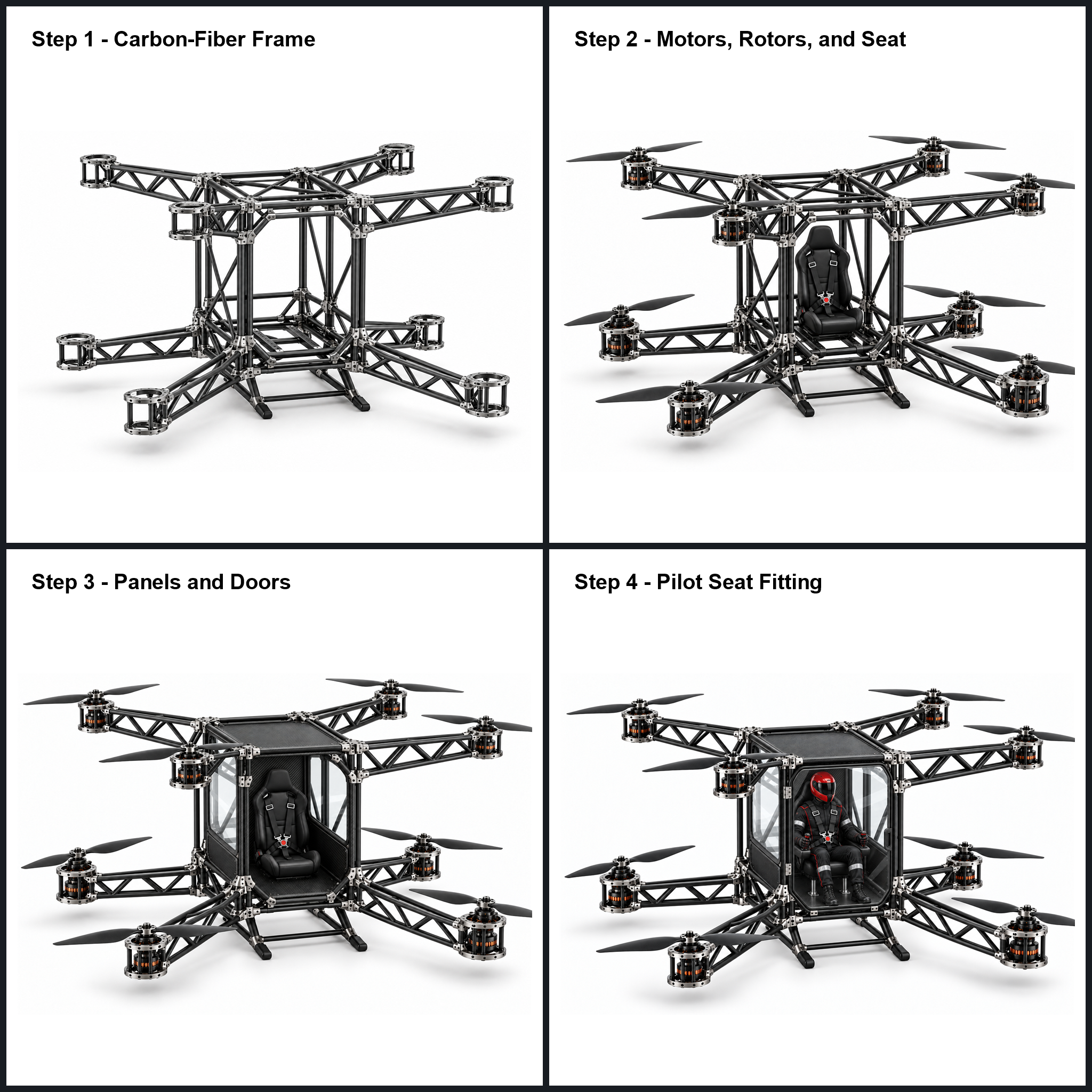
How does a single-seat eVTOL evolve from an open frame into an enclosed aircraft? This four-stage visual study follows an eight-rotor concept as the propulsion system, seat, cabin panels, and doors are added. The final view places a pilot in the cockpit to show how the cabin fits around the occupant.
Four stages of concept development
Carbon-fiber frame. Start with the open frame to show the cabin structure and how the upper and lower rotor arms connect to it.
Motors, rotors, and seat. Add the propulsion components and seat to make their positions relative to the frame visible.
Panels and doors. Add the cabin enclosure to show how the panels, windows, and door fit around the existing structure.
Pilot seat fitting. Place a helmeted pilot in the seat to visualize seating posture, control reach, and clearance inside the enclosed cabin.How AI supported the study
AI-assisted visualization made it possible to compare the same aircraft concept at four stages. Seeing the open frame and enclosed cabin side by side helps identify questions that are easy to miss in a finished render, such as how the pilot enters, how much room the helmet needs, and which components remain accessible for maintenance.
Next step toward validation
Translate the concept into a dimensioned CAD model and check pilot clearances, door access, and component packaging against defined requirements. A physical cockpit mockup could then verify seating position, control reach, and entry and exit.